Our wonderful instructors for the 2026 ACA Summer Course!
Danielle Gray – University of Illinois Urbana-Champaign
Dr. Danielle Gray studied at Augustana College where she received her B.A. in Chemistry, and later went on to Northwestern University where she received her Ph.D. in Inorganic Chemistry (2008) with James A. Ibers. After graduate school she spent two years as a postdoctoral fellow at Northwestern University with Mercouri G. Kanatzidis where she studied intermetallic materials that had complex twinned and incommensurately modulated crystal structures. Presently, Dr. Gray is the Director of the 3M Materials Chemistry Lab and G.L. Clark X-ray Facility at the University of Illinois Urbana-Champaign where she has managed the lab for the last sixteen years. She has helped instruct the ACA Summer Course in Crystallography for the last ten years.
Diane Dickie – University of Virginia in Charlottesville
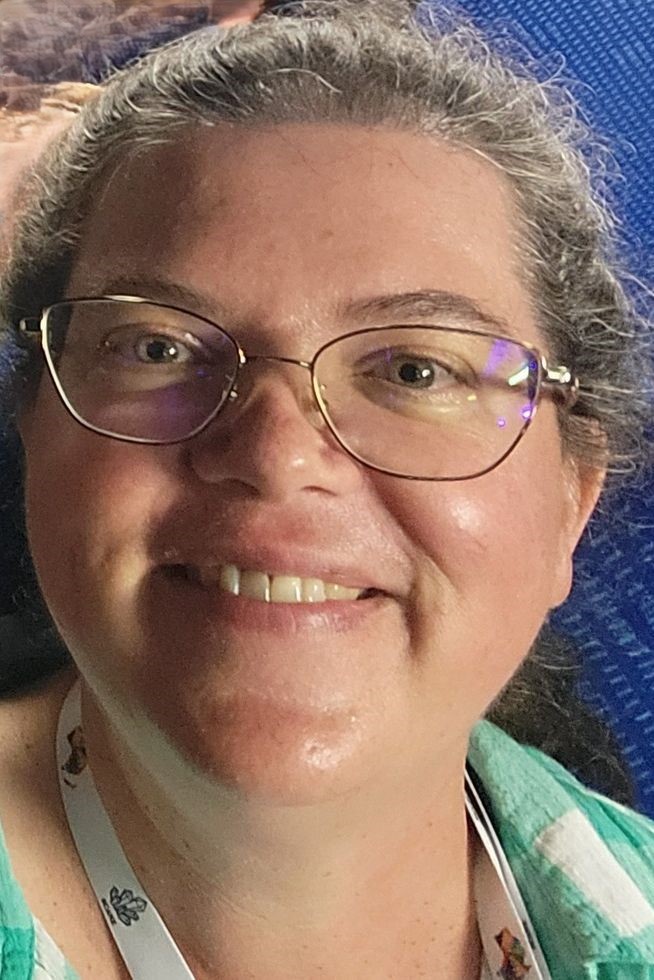
Diane Dickie began her career as a main group chemist, using single-crystal X-ray diffraction as one of many characterization techniques for the molecules she was synthesizing. She earned her B.Sc. under the supervision of Dr. Steve Westcott at Mount Allison University in Sackville, NB, Canada and her Ph.D under the supervision of Dr. Jason Clyburne at Simon Fraser University in Burnaby, BC, Canada. Partway through her postdoctoral studies under Dr. Rick Kemp at the University of New Mexico in Albuquerque, NM, the departmental crystallographer retired and she was tapped to take over responsibility for the diffractometer. After five years in this position, she spent a year as staff crystallographer at Brandeis University in Waltham, MA where she worked closely with well-known chemist and crystallographer Dr. Bruce Foxman. She now runs the X-ray diffraction facility at the University of Virginia in Charlottesville, VA, which currently consists of three single-crystal diffractometers and four powder diffractometers. She trains students to operate these instruments, and teaches a graduate-level class on structure determination by X-ray diffraction each year for the Department of Chemistry.
Pierre Le Magueres – Rigaku Americas Corporation
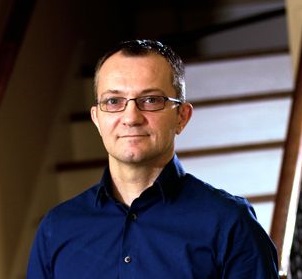
Dr. Pierre Le Magueres obtained a Ph.D. in physical chemistry and small molecule crystallography at the University of Rennes (France) in 1995, working under Dr. Lahcene Ouahab on the synthesis and analysis of molecular materials combining inorganic polyoxometalates and organic cation radicals based on tetrathiofulvalene derivatives. From 1996 to 2000, Dr. Le Magueres worked as a postdoctoral researcher with renowned Prof. Jay Kochi at the University of Houston, where he pursued his work on the synthesis and X-ray characterization of air-sensitive cation radicals and charge transfer complexes. In 2000, deciding to broaden his horizons and learn protein crystallography, Dr. Le Magueres joined the biochemistry department at the University of Houston and worked as a postdoctoral researcher with Prof. Kurt Krause on the design and X-ray characterization of potential new inhibitors for alanine racemase, a protein essential for the growth of infectious diseases such as tuberculosis.
Dr. Le Magueres was hired in 2004 as a protein crystallographer in the Life Sciences department at Rigaku. After 14 years in protein crystallography, he shifted to a position as a small molecule crystallographer at Rigaku Americas Corporation in The Woodlands, TX. While still helping with protein crystallography if needed, Dr Le Magueres’ duties are now centered on the analysis of small molecule samples and the development of hardware and software products at Rigaku for small molecule crystallography.
Nate Henderson – Bruker AXS
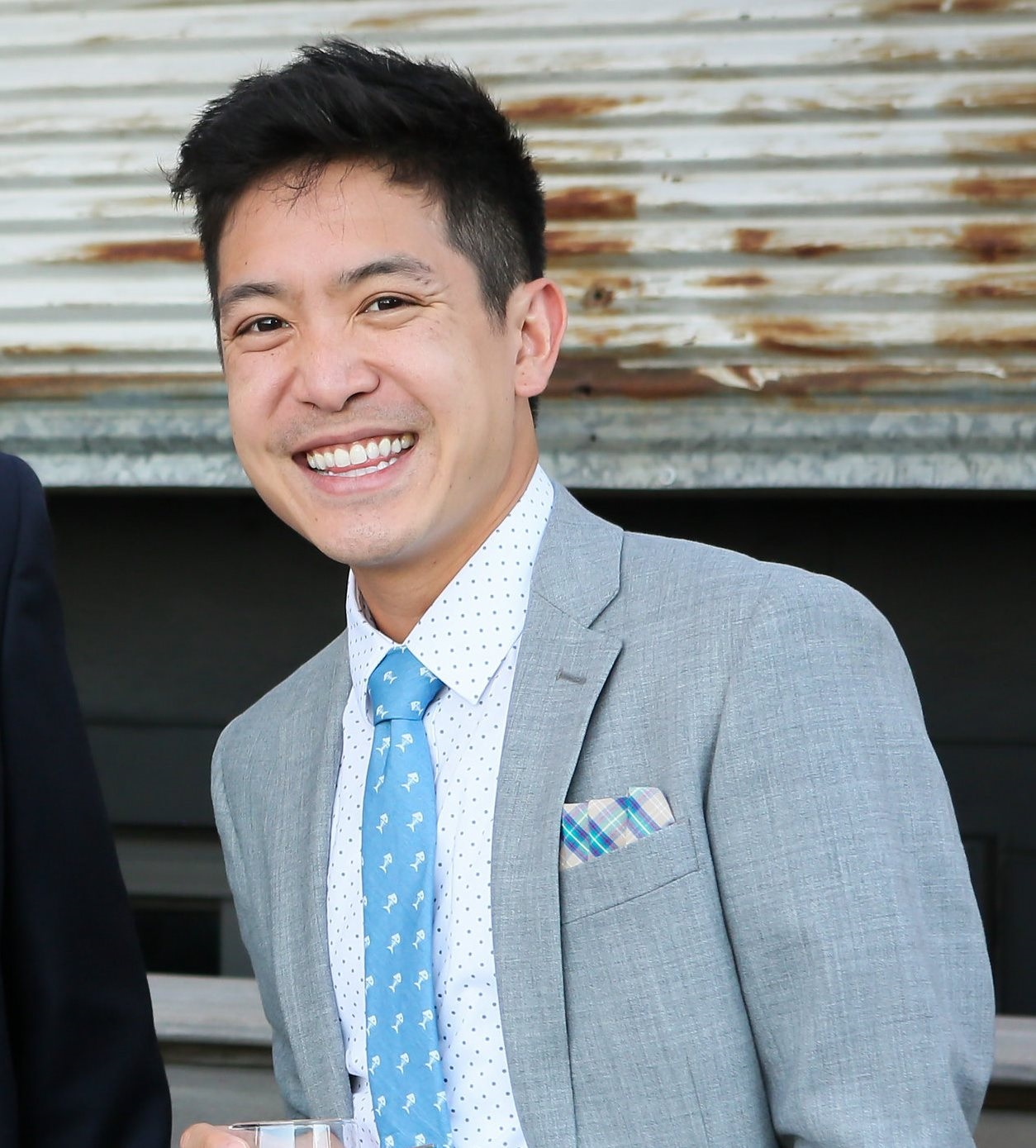
Nate Henderson is a Senior Applications Scientist at Bruker specializing in powder X-ray diffraction techniques. He received his Ph.D. in Materials Chemistry from Penn State with a focus on oxide and nanoparticle synthesis. With Bruker, his focus is on non-ambient diffraction, quantification methodology, and structural analysis. He is passionate about science education and outreach through conferences and workshops.
Robert (Bob) Von Dreele – Argonne National Laboratory
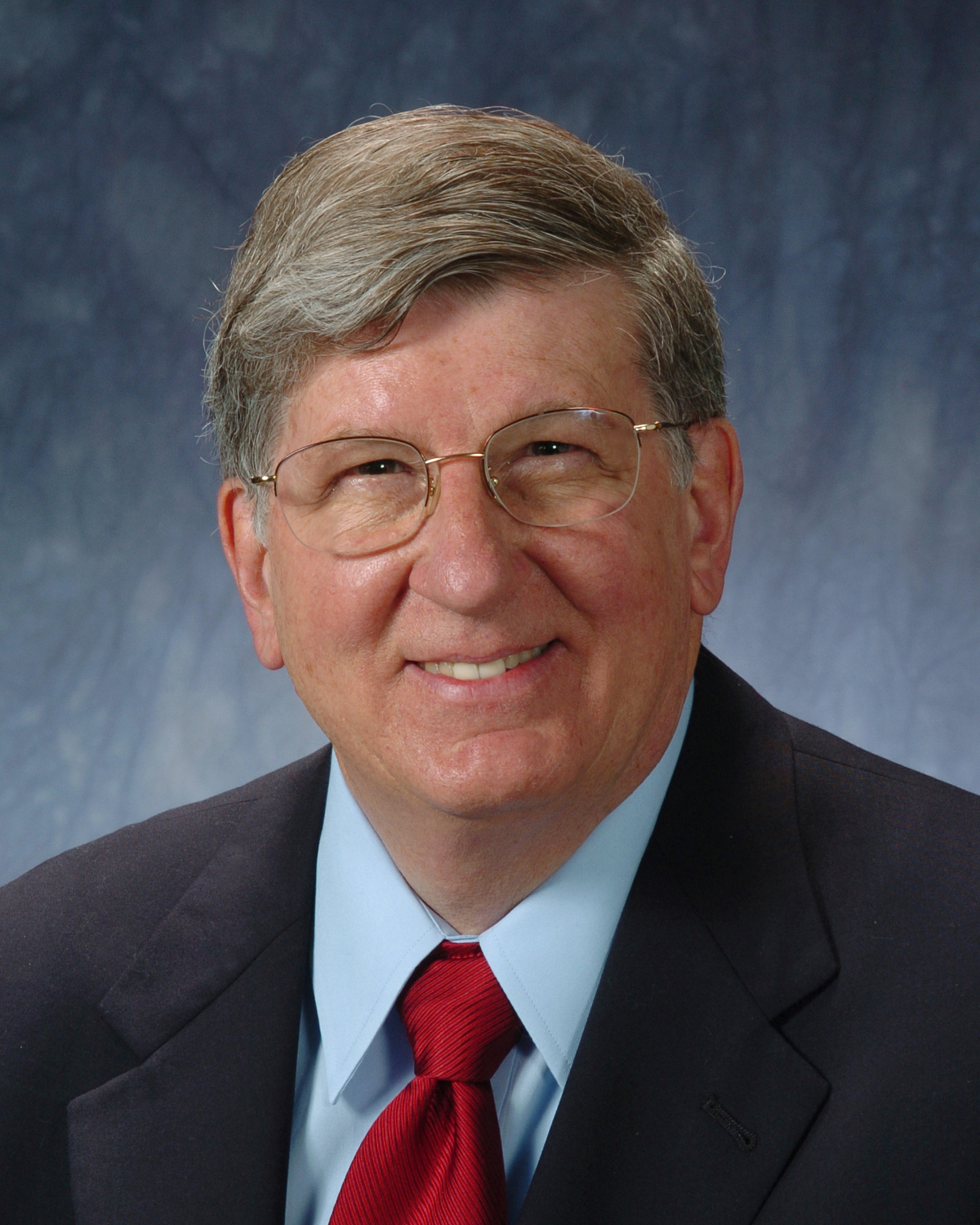
Robert (Bob) Von Dreele is a Senior Physicist at Argonne National Laboratory and works at the Advanced Photon Source. He is the main developer (with Allen Larson) of the General Structure Analysis System (GSAS) and (with Brian Toby) of the open source python GSAS-II package. His scientific interests over the years has been Rietveld refinement and all of its possible applications including the initial analysis of neutron time-of-flight powder data, crystal structures at high pressure, texture analysis, crystallite size and microstrain analysis, protein structure refinement from powder data, and more recently incommensurate structures and stacking fault simulations all of which have treatments within the GSAS-II package.
He has a BS degree in Chemical Engineering from Cornell University (1966) and a PhD in Chemistry also from Cornell (1971) with a specialization in inorganic chemistry and an interest in crystallography. He immediately joined the faculty in the Chemistry Department at Arizona State University teaching mostly introductory chemistry to freshmen and pursuing research in crystallography. In 1972-3, while on leave, he was a National Science Foundation postdoctoral fellow at the Inorganic Chemistry Laboratory at Oxford University where he began his pursuit of powder diffraction crystallography, an endeavor he continues to this day. He attained the rank of Full Professor in 1981.
In 1986 he decided to pursue his main interests in neutron scattering and joined Los Alamos National Laboratory, New Mexico, as a Scientific Staff member at the LANSCE spallation neutron source where he was the Instrument Scientist responsible for two of the neutron powder diffractometers. During this time he was a Fulbright Fellow at the ISIS neutron scattering facility, Rutherford-Appleton Laboratory in Chilton, England (1986), received a Los Alamos National Laboratory Distinguished Performance Award (1998) for his work in protein powder diffraction, presented the 5th Joseph Morgan Lecture at Texas Christian University in 2000, and was made a Fellow of the Mineralogical Society of America in 2001.
In 2003 he joined Argonne National Laboratory as a Senior Physicist with a joint appointment between the Intense Pulsed Neutron Source and the Advanced Photon Source Argonne. In early 2008 the former facility was closed down and he is now full time at the APS. In 2007 he was elected Vice-President of the American Crystallographic Association and served as President in 2009. He received the Barrett Award in 2009 and the Hanawalt Award in 2013 for his work in protein powder diffraction.
Alexander N. Erickson – Marquette University
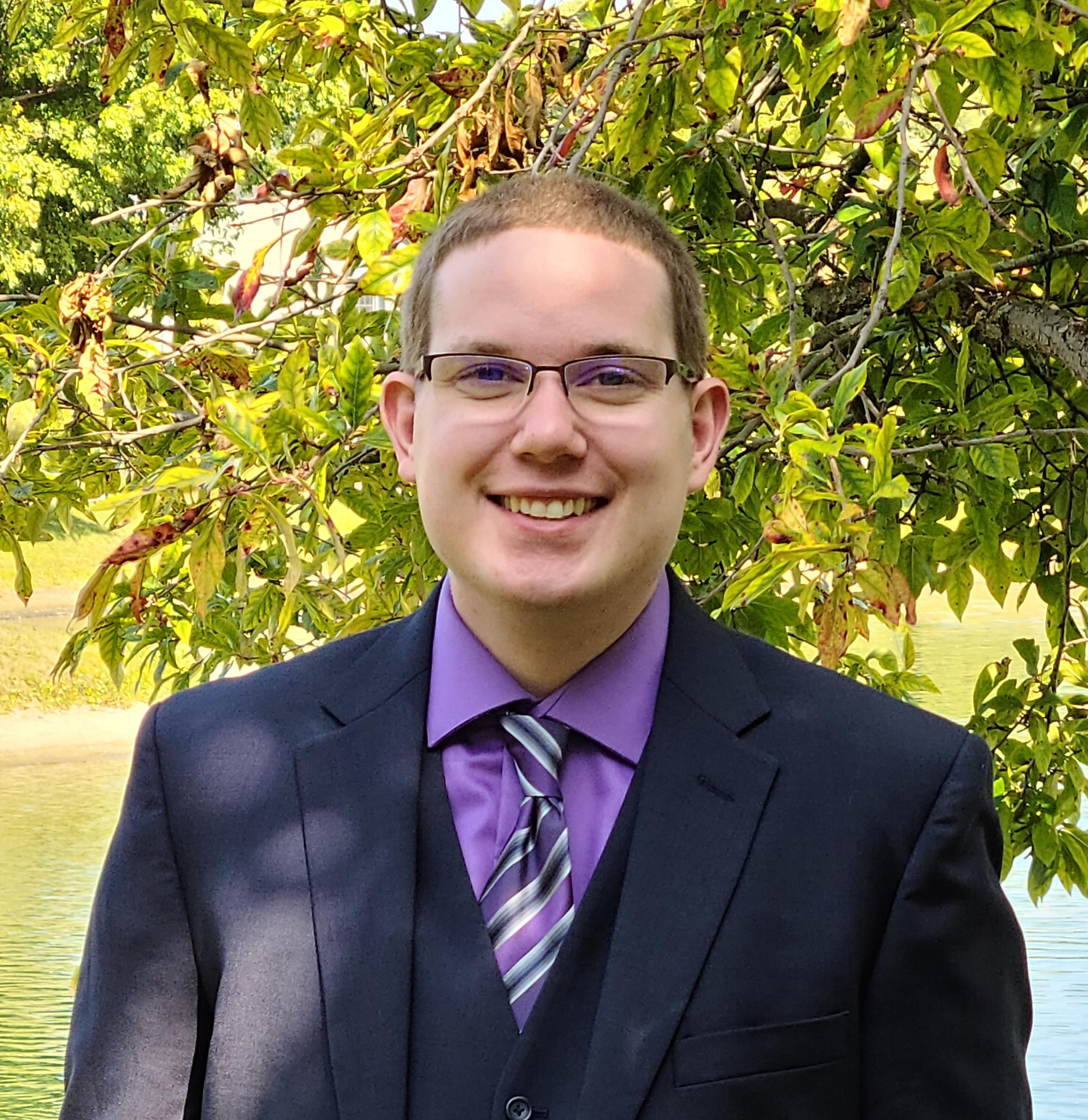
Alexander Erickson studied at the University of Portland where he received a B.S. in Chemistry. His adventure with crystallography began when he was a graduate student at the University of Notre Dame. Working with Seth Brown, he synthesized and characterized metal complexes supported by redox active ligands. This research led him to begin working with Allen Oliver in the X-ray facility where he was able to learn the fundamentals of X-ray crystallography as well as how to solve and refine structures. As a teaching assistant he was able to teach units on X-ray crystallography. This entailed assisting students with crystallization techniques and then further assistance with data collection and subsequent solving and refining of their structures. For his efforts he was awarded two teaching awards during his graduate career.
After obtaining a Ph.D. in inorganic chemistry (2021), he started his career in crystallography as staff crystallographer at the University of Memphis where he worked until 2024. Currently, Dr. Erickson is the Director of the X-ray Diffraction Facility at Marquette University where he manages the operation of the instrument, trains new users, collects data, and solves structures for service samples submitted by untrained and external researchers. He also teaches a graduate course on Chemical Crystallography.
Dr. Erickson has been faculty for the ACA Summer Course in Chemical Crystallography since 2022.
Carla Slebodnick – Virginia Tech

Dr. Carla Slebodnick was introduced to crystallography during her Ph.D. research where she studied the structure-function relationship of biomimetic porphyrin complexes under the guidance of Prof. Jim Ibers at Northwestern. After completing her Ph.D., she completed postdoctoral studies with Prof. Vincent Pecoraro at University of Michigan where she did inorganic synthesis, kinetic measurements, and heteronuclear NMR, and absolutely no crystallography.
Since 1998, Dr. Slebodnick has resided in the Appalachian Mountains in Blacksburg, Virginia where she runs the single-crystal X-ray service center at Virginia Tech. She is a great lover of crystallographic symmetry and the International Tables Volume A, and happily shares this love by teaching a full 3-credit graduate course on crystallographic symmetry at Virginia Tech.
Cora Lind-Kovacs – The University of Toledo
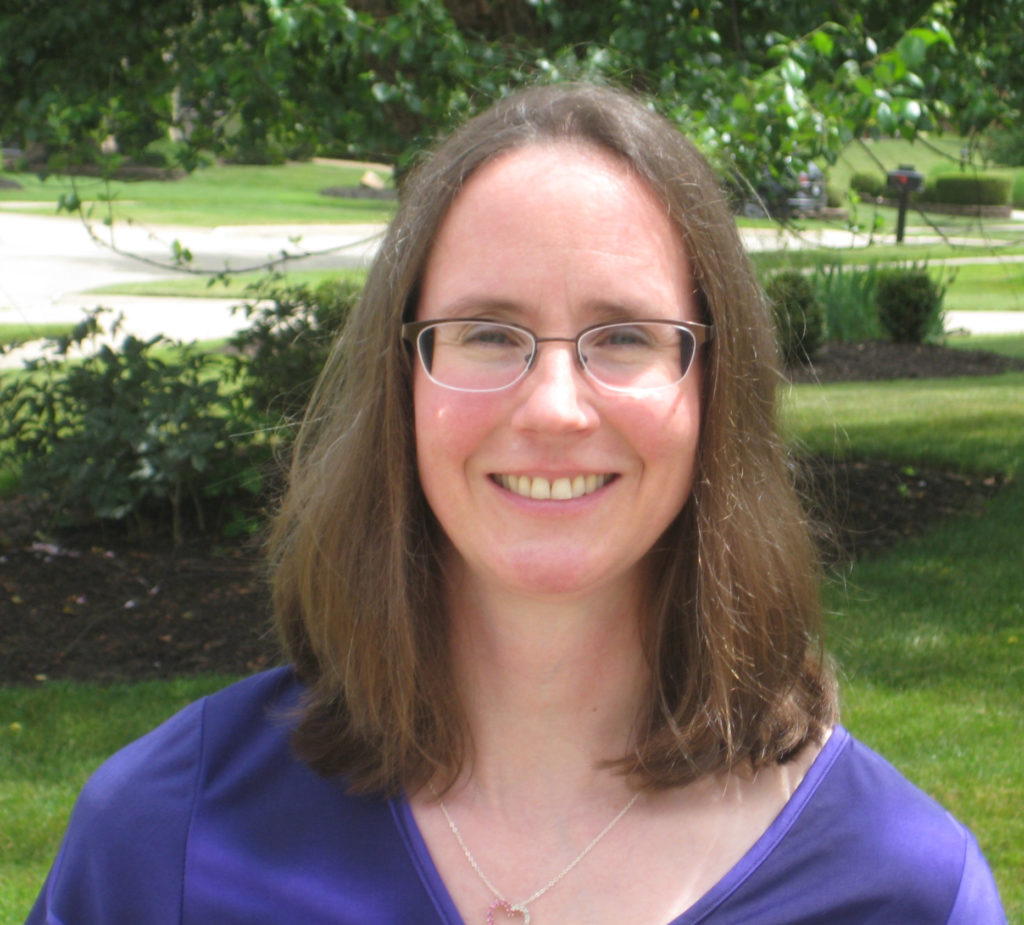
Cora Lind-Kovacs is a Professor in the Department of Chemistry and Biochemistry at the University of Toledo. As an undergraduate, she studied chemistry at the University of Wuppertal, Germany, and obtained her prediploma in chemistry in 1996. She received her Master’s and Ph.D. degrees in chemistry under Angus Wilkinson from the Georgia Institute of Technology in 1999 and 2001, respectively, and conducted postdoctoral research with Frank DiSalvo at Cornell University. In 2003, she started her independent career as an Assistant Professor at the University of Toledo, where she was subsequently promoted to Associate (2008) and Full (2014) Professor. Her research interests are focused on the synthesis and characterization of negative thermal expansion materials and the synthesis and characterization of model expander molecules for lead acid batteries. Her group heavily relies on diffraction methods, including powder X-ray and neutron diffraction under non-ambient temperatures and pressures. Cora has served on the U.S. National Committee for Crystallography (member 2007-2009; Secretary 2010-2012; Vice Chair 2015-2017; Chair 2018-2020) and is currently the President of the American Crystallographic Association. She has received several awards, including the ACA’s Etter Early Career Award and the ACS PROGRESS/Dreyfus Lecturer award.
Dr Yinka Olatunji-Ojo – Cambridge Crystallographic Data Centre (CCDC)

Dr Yinka Olatunji-Ojo received her B.S. in Chemistry from Texas Southern University in 2008. During her senior year, she was introduced to computational chemistry during a summer study abroad in Darmstadt Germany. She decided to pursue a graduate degree and received her Ph.D. in Inorganic Chemistry from the University of North Texas in 2013 utilizing computational methods to study inorganic and organometallic systems for various applications. She was a postdoctoral scientist at the University of California Berkeley where she guided experimental scientists in applying computational methods to their research. She joined a medical device start as an NSF SBIR fellow, using computational methods to conduct failure analysis on a room temperature plasma device. In 2019, Yinka joined the Cambridge Crystallographic Data Centre (CCDC) as a user support scientist and a member of the training, education, and outreach team. As part of the T, E & O team, Yinka works on creating workshop materials and delivering training at various schools and summer courses. Yinka is passionate about scientific outreach to the broader public. In 2022, she was elected to the American Crystallographic Association’s Education committee. She resides in Oakland CA and is an avid sports fan.
Cassie Ward – Wayne State University
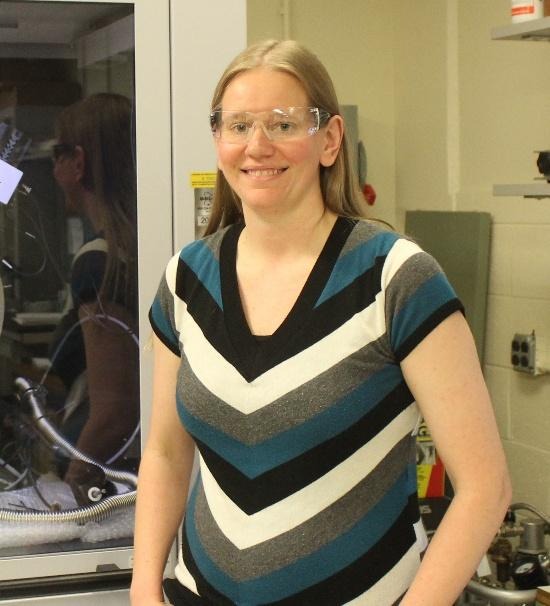
Dr. Cassie Ward earned her B.S. in Chemistry from the University of Nebraska at Omaha and completed her Ph.D. in Chemistry at the University of Kansas. Her doctoral research focused on the excitedstate reaction dynamics of photochromic molecular switches using ultrafast laser spectroscopy. She went on to pursue postdoctoral research at the University of North Carolina, where she investigated the photochemistry of ruthenium bipyridyl complexes for dyesensitized solar cells. Dr. Ward has served as the Associate Director of the Lumigen Instrument Center at Wayne State University in Detroit, Michigan, for over seven years. In this role, she is the primary smallmolecule Xray crystallographer and brings extensive expertise in analytical spectroscopic instrumentation, including XRF, UV–Vis, ICPMS, and related techniques. She also plays a key role in developing and writing instrumentation proposals to support
the acquisition of advanced research equipment for the core facility.
Michael Ruf – Bruker AXS
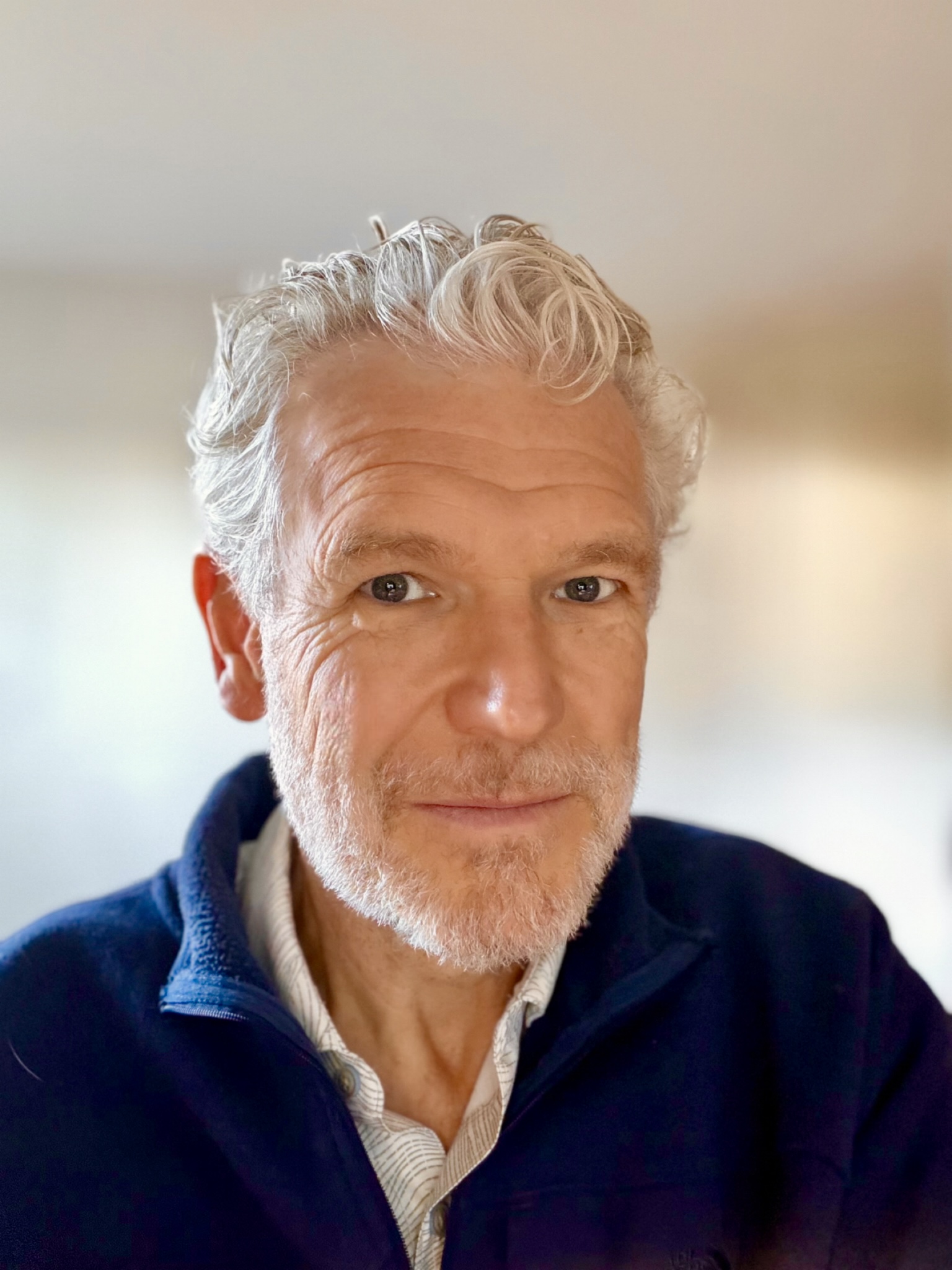
Michael Ruf is Senior Manager for Single Crystal X‑ray Diffraction at Bruker AXS, where he leads applications and business development activities for the Americas. He has more than 25 years of experience in single‑crystal X‑ray diffraction, with a background spanning academic research, instrumentation development, and user training. His teaching focuses on practical aspects of data collection, structure solution, refinement, and common pitfalls encountered in small‑molecule crystallography.
Stephan X.M. Boerrigter – Triclinic Labs, Lafayette, Indiana

Steef is currently a Research Fellow and Head of Materials Modeling at Triclinic Labs.
He studied chemistry in Utrecht, Netherlands with a major in crystallography in Jan Kroon’s lab (where Platon is from) and worked on crystal structure prediction with Dr. Van Eijck. In 2001, he obtained his Ph.D. in computational materials science from the group of Dr. Meekes at Nijmegen, Netherlands, on crystal morphology prediction.
Steef had an industrial postdoctoral fellowship at Agfa Gevaert in Antwerp (Belgium) where he worked on crystal morphology prediction and color prediction of optically active polymorphic materials. In 2003 Steef went to Purdue University in West Lafayette, Indiana to work on computational materials modeling of pharmaceuticals. As a visiting professor, he taught crystallography as part of the Pharmaceutical Solids course (IMPH587) and continues to do so as an adjunct professor. He also wrote and taught the course “Computational Methods for Molecular Crystals” (IPPH690c) and he maintained the departmental powder X-ray goniometer (Shimadzu XRD-6000).
From 2008 until 2021 Steef became a full-time researcher at the departmental spinoff company SSCI, West Lafayette, Indiana. There he became a group leader for solid form screening, became an expert at indexing powder patterns, Pawley, and Rietveld refinement and reviewed several hundreds of single crystal structure reports derived from Purdue data collections and later from the Rigaku Supernova system purchased at SSCI.
In 2021 Steef joined Triclinic Labs, which split off from SSCI. There he oversees the operations of four Rigaku Smartlab PXRD systems as well as the ELDICO ED-1 microcrystal electron diffractometer.
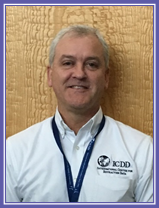
Thomas Blanton, PhD – International Centre for Diffraction Data
Tom is the Executive Director and Principal Scientist at ICDD. ICDD provides the Powder Diffraction File™ (PDF®) databases and JADE® analysis software utilized by the international diffraction community for materials characterization. Before joining ICDD he was a Senior Principal Scientist at Eastman Kodak Company where he worked in industrial applications of X-ray diffraction and X-ray fluorescence analysis. His area of focus was utilization of analytical chemistry techniques for microstructure characterization resulting in new materials for intellectual property and product development. Tom has authored/coauthored 300+ publications including 6 book chapters, 46 U.S. Patents and 60 international patents.
Tom has been an instructor for the SUNY XRD Clinics, ICDD XRF and XRD courses, and international powder diffraction workshops. He is the recipient of the ICDD Distinguished Fellow Award and Jenkins Lifetime Achievement Award.